
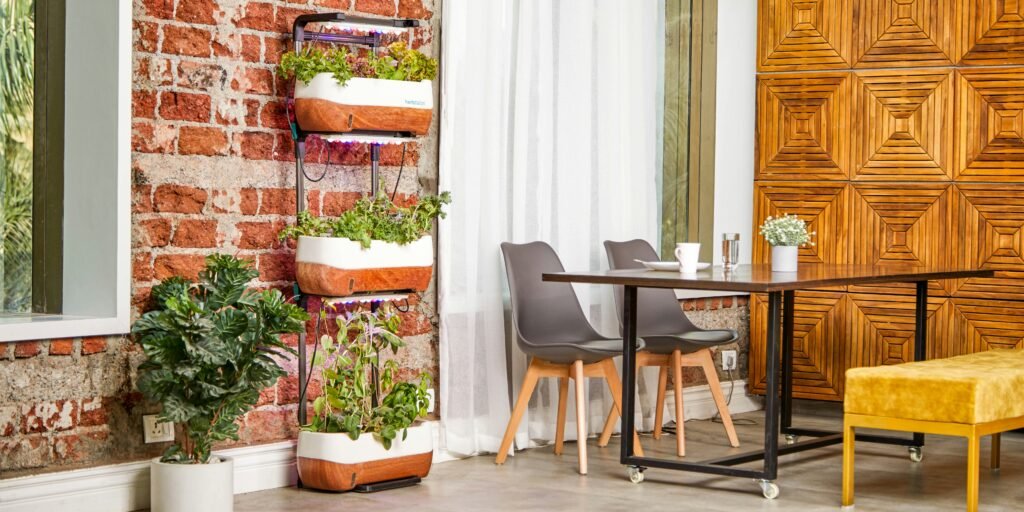
Starting hydroponics at home does not require a large farm, expensive greenhouse or advanced technical knowledge. A small, well-planned system can be enough to grow leafy greens and herbs while you learn how water, nutrients, light and plant roots work together.
1. Decide What You Want to Grow
Start with the crop rather than buying equipment first. Leafy greens such as lettuce, spinach and herbs are practical choices for a beginner because they can work well in compact systems and have relatively short growing cycles.
Large fruiting crops such as tomatoes, cucumbers and peppers usually need more space, stronger support, longer crop cycles and closer environmental management.
2. Choose the Right Location
A good home hydroponic location should have suitable light, access to water, safe drainage and enough room to inspect and maintain the system.
- Balcony: useful for compact systems when sunlight and structural conditions are suitable.
- Terrace: offers more room but requires attention to water load, drainage and electrical safety.
- Indoor area: can work with suitable grow lighting, ventilation and temperature management.
- Utility or outdoor space: can work when water and power are safely accessible.
3. Choose a Hydroponic System
The system should match your crop, available space, budget and willingness to maintain it.
| System | Good for | Beginner consideration |
|---|---|---|
| NFT | Lettuce and leafy greens | Compact and efficient, but flow must be maintained |
| DWC | Leafy greens and simple home growing | Simple design with an aerated nutrient solution |
| Kratky | Small-scale learning | No recirculating pump, but crop and container selection matter |
| Vertical | Limited floor space | Uses height but needs good light and access |
If you are new to hydroponics, keep the first system simple. The goal is to learn the fundamentals before adding automation or expanding capacity.
4. Understand the Basic Equipment
A home hydroponic setup may include growing channels or containers, a reservoir, net pots, growing media, tubing, a pump or air pump depending on the system, nutrients and basic measuring equipment.
- Growing channels, containers or buckets
- Nutrient reservoir
- Net pots and suitable growing media
- Water or air pump as required by the system
- Tubing, fittings and valves
- Hydroponic nutrients
- pH and EC/TDS monitoring equipment
- Timer and electrical protection where required
5. Start With a Manageable Number of Plants
A common beginner mistake is trying to maximise the number of plants immediately. Start with a system that you can inspect easily. A smaller installation makes it easier to understand nutrient levels, plant spacing, root development, water consumption and maintenance.
6. Prepare the Water
Water is one of the foundations of hydroponics. Test the source water before deciding how to manage it. Depending on the water quality, you may need filtration or other treatment.
Do not add nutrients blindly. Follow the nutrient manufacturer’s mixing instructions and monitor the solution using appropriate measurements.
7. Learn pH and EC Before Planting
Two important measurements in hydroponics are pH and electrical conductivity (EC). pH helps indicate how suitable the nutrient solution is for nutrient availability, while EC provides an indication of the dissolved nutrient concentration.
You do not need to become an expert before starting, but you should understand what your meters measure and how your chosen crop should be managed.
8. Give Plants Enough Light
Plants need adequate light for photosynthesis. Outdoor systems should be positioned according to sunlight and seasonal conditions. Indoor systems may require grow lights.
A bright-looking room does not automatically provide enough usable light for productive plant growth. Light intensity, duration and plant distance all matter.
9. Start With Healthy Seedlings
Healthy seedlings give a home hydroponic system a better starting point. Depending on the crop and system, seeds can be started in suitable media and transferred once the seedlings have developed sufficiently.
Handle young roots carefully during transplanting and make sure the growing medium provides appropriate support.
10. Test the System Before Planting
Before placing plants into the system, test water flow, pump operation, aeration, drainage and reservoir level. Run the system long enough to identify leaks or blockages before relying on it for plants.
A system that works correctly when empty is much easier to troubleshoot than one that is already filled with valuable crops.
11. Create a Simple Maintenance Routine
Home hydroponics becomes easier when maintenance is scheduled rather than left until something goes wrong.
- Check plant health and root condition.
- Monitor pH and EC/TDS as appropriate for the system.
- Check water level and nutrient solution.
- Inspect pumps, tubing and fittings.
- Remove damaged or diseased plant material.
- Keep the growing area clean.
- Watch for pests and algae.
12. Avoid These Beginner Mistakes
- Starting with a system that is too large.
- Overcrowding plants.
- Ignoring water quality.
- Adding too much nutrient because more is assumed to be better.
- Failing to check pump or aeration operation.
- Using an unsuitable location with poor light or drainage.
- Adding automation before understanding the basic system.
- Not leaving enough access for cleaning and maintenance.
How Much Does It Cost to Start at Home?
The budget depends heavily on the system and number of plants. A basic DIY setup can be relatively inexpensive, while a larger prefabricated or automated system can cost considerably more. For a detailed breakdown of setup components and indicative Indian cost ranges, see How Much Does a Hydroponic System Cost in India?.
Should You Build or Buy a Hydroponic System?
Building a system can reduce the initial equipment cost and help you understand how the system works. Buying a ready-made system can save time and may provide a more straightforward starting point.
The right choice depends on your technical comfort, available time, desired plant capacity and the support you need after installation.
A Simple Beginner Setup
For someone starting at home, a practical approach is to choose a small number of leafy green plants, use a simple hydroponic system, test the water, establish a basic monitoring routine and expand only after the first crop cycle is understood.
This keeps the learning curve manageable and makes it easier to identify what needs improvement before investing in a larger setup.
Can Aqua Greens Help?
Aqua Greens can help you evaluate your available space, crop requirements and growing goals and select a hydroponic setup suited to your home. The objective is to build a system that is practical to operate, maintain and expand.
FAQs
Can I start hydroponics at home with a small space?
Yes. Compact NFT, DWC, Kratky and vertical systems can be designed for balconies, terraces or suitable indoor spaces.
What is the easiest crop for a beginner?
Leafy greens and herbs are commonly suitable starting crops because many varieties can be grown in compact systems and have relatively short cycles.
Do I need a greenhouse for home hydroponics?
No. A greenhouse is not automatically required for a home setup. The need for protection depends on the location, crop, climate, sunlight, rain, pests and temperature.
Do I need electricity?
Some systems require pumps, aeration or grow lights and therefore need electricity. Passive methods such as Kratky can reduce the need for powered water circulation, depending on the crop and setup.
How many plants should I start with?
Start with a manageable number that you can monitor and maintain comfortably. It is usually better to understand a small system before expanding it.
What’s Next?
Common Hydroponic Farming Mistakes Beginners Should Avoid
Learn how to identify and prevent the most common mistakes that can affect plant growth, nutrient management, system performance and harvest quality.
Next guide coming soon.