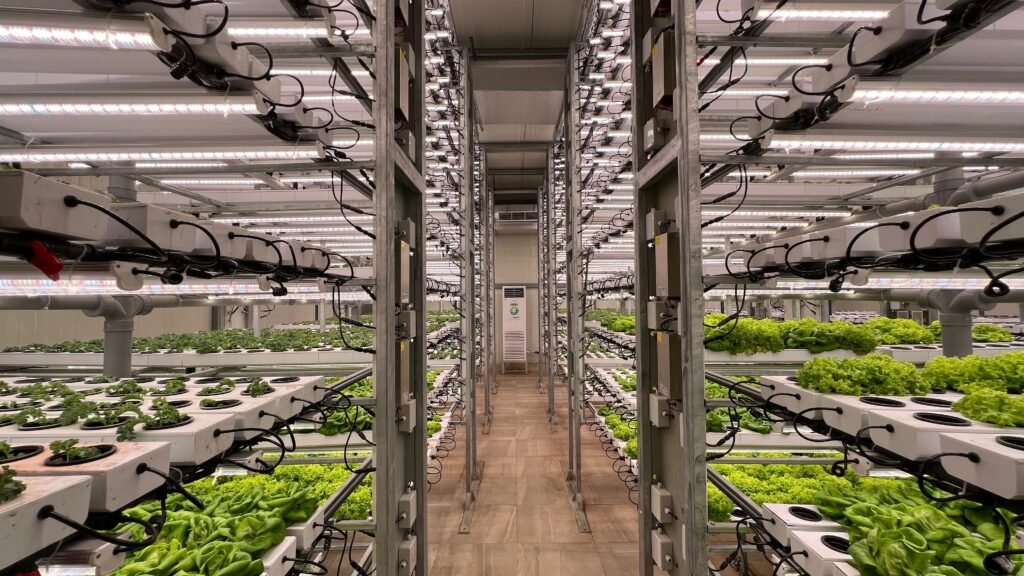
Hydroponics is not a single growing method. It is a broad category of soilless cultivation systems that deliver water, nutrients and oxygen to plant roots in different ways.
Choosing the right system depends on the crop, available space, budget, level of automation, climate and how much daily management you can provide. In this guide, we will compare the major types of hydroponic systems and explain how each one works, where it is commonly used, and what to consider before choosing one.
What Is a Hydroponic System?
A hydroponic system is the physical setup used to deliver a nutrient solution to plant roots without relying on traditional soil. Depending on the design, roots may sit directly in nutrient solution, receive a flowing film of solution, or be supported by an inert growing medium.
Most systems need some combination of a reservoir, nutrient solution, growing channels or containers, plumbing, pumps or air pumps, plant supports and monitoring equipment. The exact components vary by system.
How Are Hydroponic Systems Classified?
Hydroponic systems are often grouped according to how the nutrient solution reaches the roots.
- Static or passive systems: The solution is not continuously pumped to the roots.
- Active systems: Pumps or other equipment move nutrient solution or oxygen through the system.
- Liquid systems: Roots are supported with little or no solid growing medium.
- Media-based systems: Plants are supported by materials such as coco coir, clay pebbles or other inert media while nutrients are delivered through irrigation.
1. NFT – Nutrient Film Technique
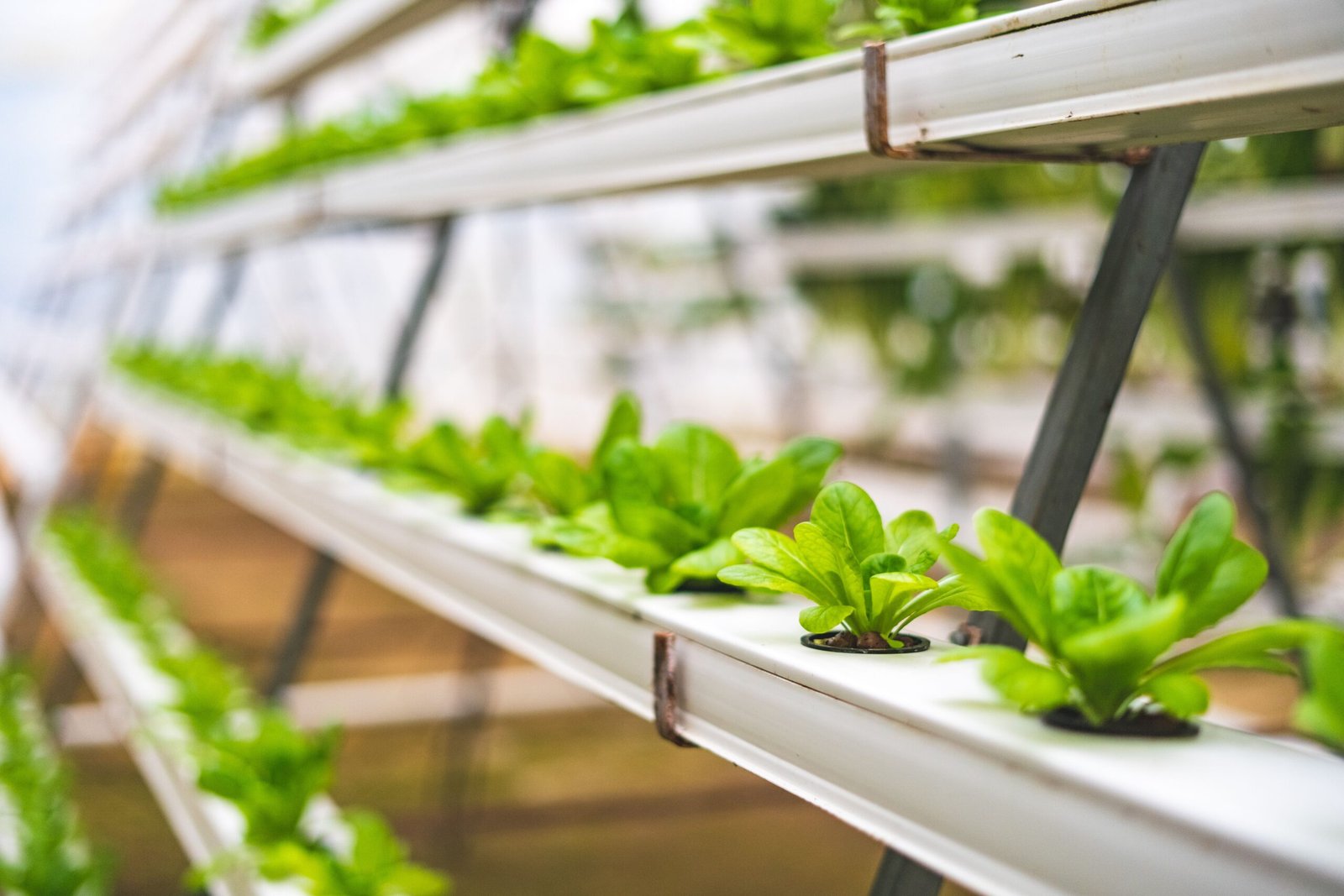
NFT is one of the most widely recognised hydroponic systems for leafy greens. A shallow stream of nutrient solution flows continuously through slightly inclined growing channels. Plant roots sit inside the channel and receive water and nutrients while part of the root zone remains exposed to air.
NFT is particularly useful where uniform channels, good drainage and efficient recirculation are desired.
Common NFT crops
- Lettuce
- Spinach
- Kale
- Coriander
- Basil and other herbs
Advantages of NFT
- Efficient recirculation of nutrient solution
- Good access to oxygen around the roots
- Suitable for many leafy greens
- Can be arranged in compact layouts
Things to consider
NFT depends on reliable flow. Pump failure, blocked channels or an incorrect slope can quickly affect the root zone, so system design and monitoring are important.
2. DWC – Deep Water Culture
In Deep Water Culture (DWC), plant roots are suspended in a nutrient solution held in a reservoir or growing container. An air pump and air stones are commonly used to keep the water oxygenated.
DWC has a relatively simple operating principle and can work well for beginners when the reservoir, oxygen supply and nutrient solution are managed correctly.
Advantages of DWC
- Simple system design
- Direct access to water and nutrients
- Relatively few moving parts in basic setups
- Suitable for home and educational systems
Things to consider
Because the roots remain close to the nutrient solution, water temperature and dissolved oxygen can have a major effect on root health.
3. Drip Hydroponic Systems
Drip systems deliver nutrient solution to individual plants through small emitters or drip lines. Plants are usually supported in a growing medium such as coco coir, clay pebbles or another suitable substrate.
The solution may drain away after delivery or be collected and recirculated, depending on the system design.
Where drip systems are useful
- Tomatoes
- Cucumbers
- Capsicum
- Strawberries
- Larger plants that need individual irrigation points
Advantages of drip systems
- Precise delivery to individual plants
- Flexible for different crop sizes
- Works well with media-based growing
- Can be automated with timers and controllers
4. Ebb and Flow – Flood and Drain
An Ebb and Flow or flood-and-drain system periodically floods the growing area with nutrient solution and then allows the solution to drain back into the reservoir.
The repeated wetting and draining cycle provides roots with water and nutrients while also allowing air to enter the root zone between irrigation cycles.
Advantages
- Good root-zone aeration when correctly managed
- Can support a range of crops
- Works well with different growing media
- Can be automated using a timer and pump
5. Wick Systems
A wick system is one of the simplest passive hydroponic designs. Wicks draw nutrient solution from a reservoir toward the growing medium through capillary action.
Because it does not normally require a water pump, it can be useful for small-scale learning projects and simple home setups.
Limitations
Wick systems are generally better suited to smaller plants and lower-demand crops. The wick may not supply water quickly enough for larger or fast-growing plants.
6. Kratky Method
The Kratky method is a passive deep-water technique in which plants grow above a nutrient solution without a continuously running pump. As the plant consumes water, the solution level falls and an air gap develops around part of the roots.
Its simplicity makes it popular for small home experiments and low-maintenance projects, although crop size and water requirements need to be considered carefully.
7. Aeroponics
In aeroponics, plant roots are suspended in air and exposed to a fine nutrient mist or spray. This provides direct access to moisture, nutrients and oxygen.
Aeroponic systems can be technically advanced and require reliable pumps, nozzles and monitoring. Because the roots are not sitting in a large reservoir of nutrient solution, interruptions in misting can become a serious issue.
Where aeroponics fits
Aeroponics is often considered for advanced controlled-environment growing, research, propagation and specialised production where precise environmental control is available.
8. Vertical Hydroponic Systems
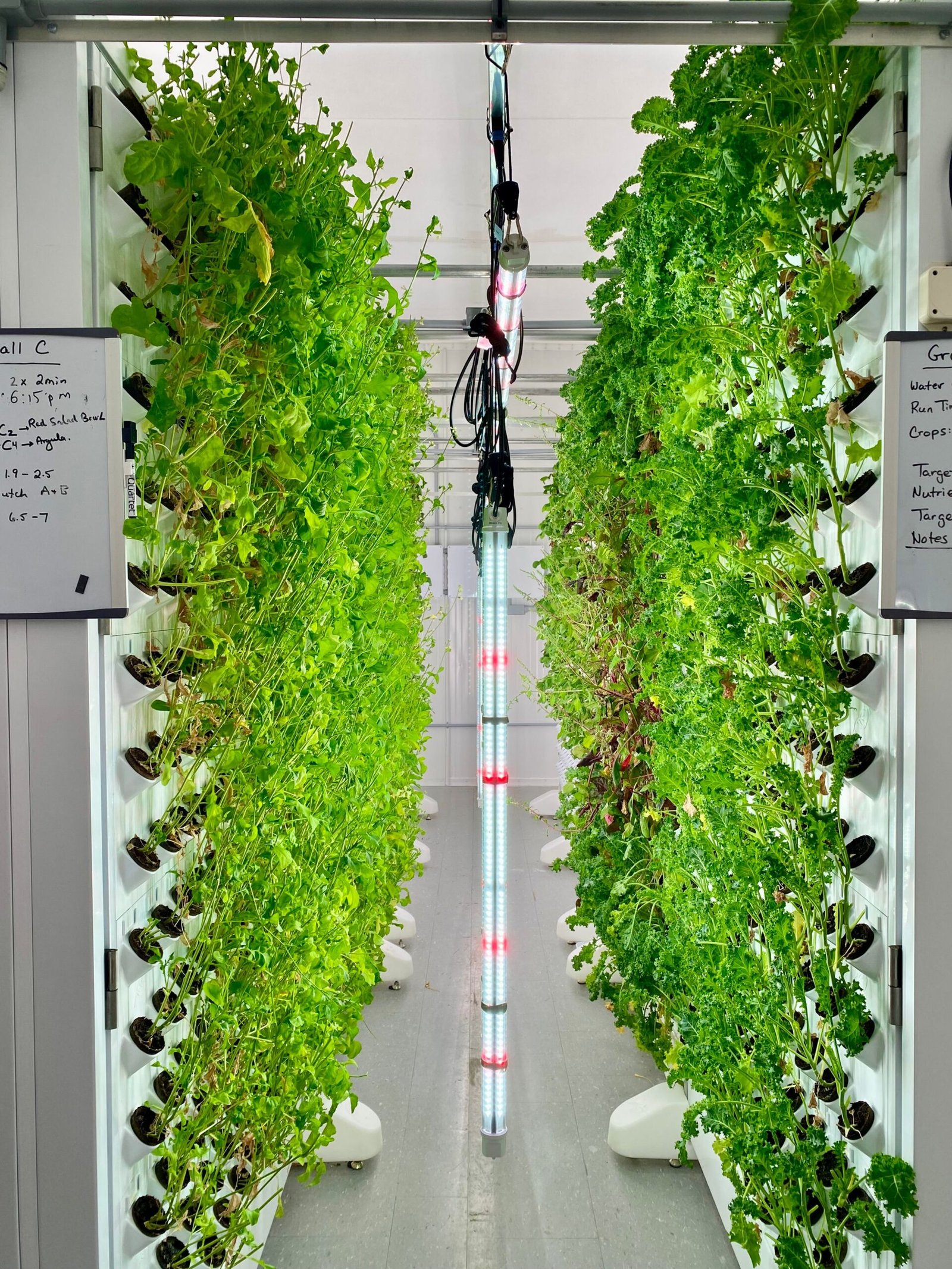
Vertical hydroponics arranges multiple growing sites above one another to make better use of floor space. A vertical system can use NFT channels, towers, drip irrigation or other hydroponic methods.
This means vertical hydroponics is better understood as a layout or growing architecture rather than one single nutrient-delivery technique.
Why use vertical systems?
- Efficient use of limited floor area
- Suitable for terraces and controlled growing spaces
- Can increase the number of growing sites per floor area
- Can be combined with NFT, drip or other irrigation methods
Hydroponic System Comparison
| System | How it delivers nutrients | Common use | Complexity |
|---|---|---|---|
| NFT | Thin flowing film of solution | Leafy greens and herbs | Moderate |
| DWC | Roots suspended in aerated solution | Leafy greens and home systems | Low to moderate |
| Drip | Emitters deliver solution to plants | Fruiting crops and media systems | Moderate |
| Ebb and Flow | Periodic flooding and draining | Mixed crops and media systems | Moderate |
| Wick | Capillary action | Small passive systems | Low |
| Kratky | Passive reservoir method | Small-scale growing | Low |
| Aeroponics | Fine nutrient mist | Advanced controlled growing | High |
| Vertical | Depends on the irrigation method | Space-efficient growing | Varies |
How Do You Choose the Right Hydroponic System?
There is no single system that is right for every grower. Start with the practical requirements rather than choosing a system because it looks advanced.
Consider the crop
Leafy greens often fit NFT and DWC systems well, while larger fruiting crops may need individual irrigation and stronger plant support.
Consider your available space
A balcony, terrace, greenhouse and commercial farm have very different requirements. Measure usable space and leave enough room for maintenance and harvesting.
Consider your water and power reliability
Active systems depend on pumps, while some passive systems can continue operating for longer during short interruptions. Reliable electricity and appropriate water quality are important considerations for any larger installation.
Consider your management level
Hydroponics requires monitoring. pH, EC, water level, temperature, cleanliness and plant health should be checked according to the system and crop. A simpler system that you can manage consistently may be more practical than a highly automated setup that you cannot maintain.
Which Hydroponic System Is Best for Beginners?
For beginners, a simple DWC, Kratky or small NFT setup can provide a manageable way to understand the fundamentals. The best starting point depends on the crop, available space and whether the goal is learning, home production or commercial growing.
Before investing in a larger system, it is useful to understand nutrient management, pH, EC, oxygen, water quality, sanitation and basic plant requirements.
Common Mistakes When Choosing a System
- Choosing the system before deciding which crop to grow
- Ignoring access for cleaning and maintenance
- Underestimating the importance of water quality
- Using a pump or plumbing setup that is not matched to the system
- Starting with a commercial-scale setup without testing a smaller system
- Assuming vertical systems automatically reduce every operating cost
Aqua Greens: Choosing a System for Your Space
At Aqua Greens, hydroponic systems can be planned around the crop, available space, capacity and intended use rather than using the same design for every project.
Whether you are considering an NFT setup, vertical hydroponics, a terrace system or a larger commercial installation, the right design starts with understanding your growing requirements.
Frequently Asked Questions
What are the main types of hydroponic systems?
Common types include NFT, DWC, drip, ebb and flow, wick systems, Kratky, aeroponics and vertical systems that combine different nutrient-delivery methods.
Which hydroponic system is easiest to maintain?
Simple passive systems such as Kratky can have fewer mechanical components, while DWC and small NFT systems can also be manageable when correctly designed and monitored.
Is vertical hydroponics a separate hydroponic method?
Vertical hydroponics is primarily a space-efficient layout. It can use different nutrient-delivery methods, including NFT, drip irrigation and tower systems.
Which system is suitable for lettuce?
Lettuce can be grown successfully in several systems, including NFT and DWC. The appropriate choice depends on scale, environment, water quality and management.
Which system is suitable for tomatoes?
Tomatoes generally need more root volume, plant support and irrigation control than leafy greens. Drip systems with a suitable growing medium are commonly used for larger fruiting crops.
Conclusion
Hydroponic systems differ mainly in how they deliver water, nutrients and oxygen to the root zone. NFT, DWC, drip, ebb and flow, wick, Kratky, aeroponics and vertical systems each have different operating requirements.
The right choice should be based on the crop, available space, budget, water quality, power reliability and the level of management you can provide. Understanding these differences is the first step toward designing a hydroponic system that is practical and maintainable.
What’s Next?
Hydroponics vs Traditional Farming: What’s the Difference?
Compare hydroponic and soil-based farming across space, water, nutrients, maintenance, costs, crop suitability and practical growing conditions.
Next guide coming soon.